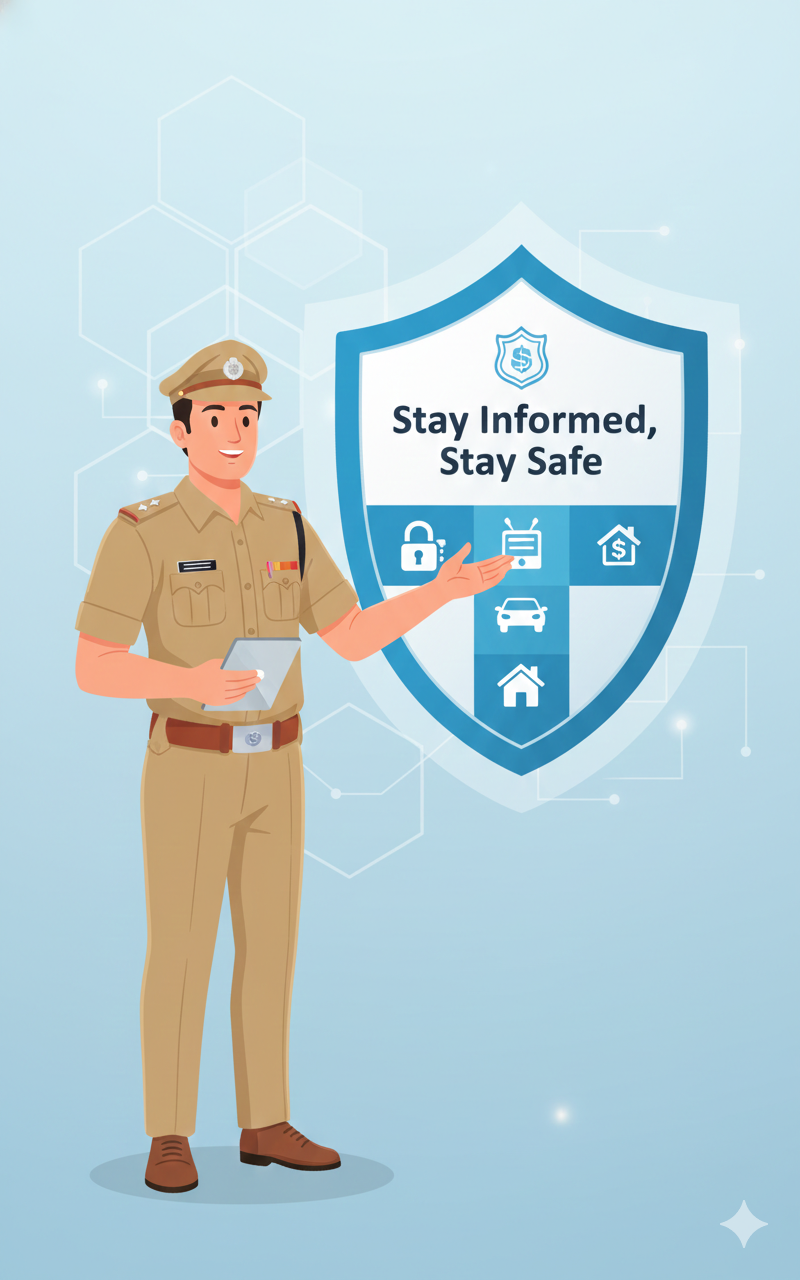
Give a strong password. Change your password on a regular basis as per the password
policy.
Never share personal data with others.
Always remember to sign out properly after using your account.
Use antivirus software and keep it up to date.
Update the operating system and application patches regularly.
Never open or respond to any mail or attachment from an unknown sender.
×
Fire Safety Tips
Always use an insulated lifter to pick utensils from a burning stove.
Put out matchsticks before throwing them into the dustbin, or use a gas lighter.
Always keep a safe distance from electric ports.
Always maintain a safe distance from open fire.
×
Holi Safety Tips
Use natural and organic colors.
Avoid throwing colors into eyes or face.
Keep water balloons away from face and eyes.
Wear old clothes.
×
Safety Measures in Flood
Ensure that people living in flood-prone areas are aware of the possible risks and
dangers.
Follow instructions issued by media, radio, or local authorities regarding heavy or
prolonged
rainfall.
Keep essential flood rescue and emergency equipment ready.
×
Safety Tips to Prevent Terrorism
Stay alert and report any suspicious bags, packages, vehicles, or unusual activities in
public
places such as stations and airports to the police or concerned authorities.
Do not allow unknown persons to carry prohibited items such as bags, packets, cameras,
or other
articles into temples or other important locations.
×
Road Safety Tips
Avoid using mobile phones or any distracting devices while driving.
Always wear your seat belt before starting the vehicle.
Never drive under the influence of alcohol or drugs.
Follow speed limits and avoid over-speeding.
Be mindful of children, elderly people, and pedestrians on the road.
Do not drive when you are tired or feeling drowsy.
Stay alert and anticipate the actions of other road users.
Wear a helmet while riding a two-wheeler.
Focus on driving and avoid unnecessary multitasking.
Obey traffic signals and road rules at all times.
Drive carefully near schools, hospitals, intersections, and busy junctions.
Maintain a safe distance from the vehicle ahead.
×
Safety Tips While Travelling in Railways
Travel only with a valid ticket.
Use the Foot Over Bridge (FOB) while changing platforms.
Do not attempt to board or get down from a moving train.
Avoid carrying inflammable materials or firecrackers inside the compartment.
Do not accept food or beverages from strangers.
Report any unclaimed luggage or suspicious items found in the compartment or railway
premises to
RPF/TTE/GRP or railway authorities immediately.
Inform railway officials about any suspicious behavior or activities noticed during
travel.
Secure your luggage properly by chaining it to the hooks provided in the compartment.
×
Pedestrian Safety Tips
Stay alert and follow all traffic lights, road signs, and signals.
Use designated crosswalks or zebra crossings when crossing the road.
Do not run or rush while crossing streets.
Walk on footpaths or sidewalks whenever they are available.
Be extra cautious when crossing busy roads or major intersections.
If you have difficulty seeing or walking, seek assistance while crossing the road.
×
Pedestrian Safety Tips
Avoid using mobile phones or any distracting devices while driving.
Always wear your seat belt before starting the vehicle.
Never drive under the influence of alcohol or drugs.
Follow speed limits and avoid over-speeding.
Be mindful of children, elderly people, and pedestrians on the road.
Do not drive when you are tired or feeling drowsy.
Stay alert and anticipate the actions of other road users.
Wear a helmet while riding a two-wheeler.
Focus on driving and avoid unnecessary multitasking.
Obey traffic signals and road rules at all times.
Drive carefully near schools, hospitals, intersections, and busy junctions.
Maintain a safe distance from the vehicle ahead.
×
Safety Measures during Flood
Stay calm and avoid panic.
Keep essential supplies safe, secure, and dry.
Stay connected with local media and follow official instructions carefully.
Avoid driving or walking through flooded roads without knowing the depth or water
current.
×
Measures after Flood
Stay updated with the latest announcements and radio broadcasts about the flood
situation.
Do not switch on electrical connections until the house is completely dry.
Disinfect your surroundings by spreading bleaching powder or other recommended
materials.
Take necessary vaccinations and medical precautions as advised by health authorities.
×
Traffic Safety Tips for Kids
Learn and understand basic traffic signals and road signs.
Always look both ways before crossing the road.
Walk on the sidewalk whenever available, or keep to the left side of the road.
Never put your head, hands, or any body part outside a moving vehicle.
×
Traffic Safety Tips for Parents
Ensure your child’s safety while dropping or picking them up from school.
Teach children the correct knowledge and safe practices for using roads.
Educate your child about basic traffic rules, including how to walk safely and cross the
road
properly.
Do not permit minors to drive any vehicle.
×
Safety at Home
Make sure all doors and windows are properly locked, especially before leaving home or
going to
bed. Replace locks immediately if keys are lost.
Remain alert and aware of your surroundings and the people nearby.
Get to know your neighborhood and identify situations or areas that may pose security
risks.
Avoid walking alone at night or in unfamiliar locations whenever possible.
Learn basic crime prevention measures to protect yourself and your family.
Keep important emergency contact numbers, including your local police station or dial
112 in
case of emergency.
×
Senior Citizen Safety Tips
Always carry a valid identity card when stepping out.
Avoid discussing financial matters in front of strangers or domestic help.
Keep valuable items secured in a bank locker or safe deposit vault.
Treat domestic staff respectfully but remain cautious about personal information.
Do not permit unknown persons or relatives of staff to enter your home without
verification.
If living alone, inform trusted neighbors and housing society officials.
Install security devices such as door alarms, electronic doorbells, or CCTV cameras with
professional assistance.
Use a peephole or safety chain before opening the door and allow entry only to verified
individuals.
Avoid keeping spare keys in obvious or easily accessible hiding places.
Verify the identity of repair personnel, salespersons, or service providers before
granting
access.
Ensure that workers or visitors are not left unattended inside the house.
Keep essential medicines and emergency contact numbers, including your family doctor and
emergency medical services, readily available.
×
Security in the Street
Avoid carrying unnecessary valuables when going out.
Carry only the amount of cash you actually need.
Do not walk alone in isolated or poorly lit areas.
Keep your bag or belongings close to your body at all times.
Store cash, credit cards, and important items in inside pockets or secure compartments,
and
avoid keeping them in back pockets.
×
Email Safety Tips
Do not open unknown attachments.
Use strong passwords.
Beware of phishing emails.
Never share personal info.
×
Safety Tips in ATM Counter
Stay alert and observe your surroundings while using the ATM.
Shield the keypad and enter your PIN confidentially.
Avoid counting cash at the ATM machine or in public view.
Regularly check your bank statements and account balance, and immediately report any
suspicious
activity to your bank.
×
Tips for Safe Banking
Do not share your bank account details, username, password, or OTP with anyone.
Avoid providing introductions or references to unknown persons for opening bank
accounts.
Keep track of cheques, drafts, or pay orders issued by you, especially those sent
through post
or courier.
As far as possible, handle your banking transactions personally.
Keep your cheque book and important banking documents in a secure place.
Review your monthly bank statements regularly to detect any unauthorized transactions.
Report any suspicious financial activity immediately to the bank and concerned
authorities.